
Loading...
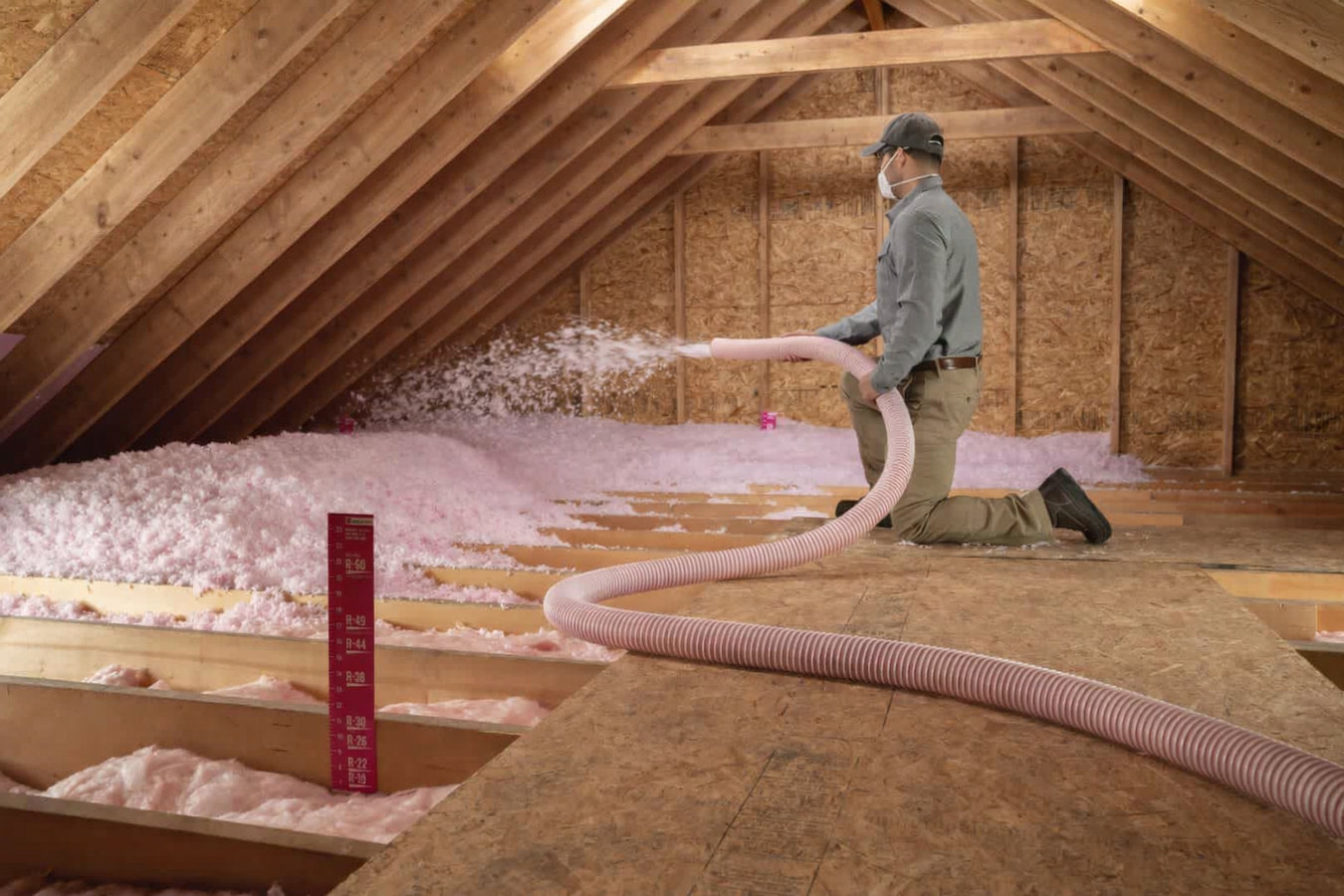
Desert heat pours through thin attics and drives your AC bill sky-high. Blown-in insulation fills every gap so your home stays cooler and your system works less.
Blown-in insulation in Sunland Park uses loose fiberglass or cellulose material pushed through a hose into your attic, filling every corner and irregular space that batts or rigid panels cannot reach - most standard attics are done in two to four hours.
In the Chihuahuan Desert, attic temperatures can climb past 140 degrees on a summer afternoon. Without a proper insulation barrier, that heat transfers straight into your living space and forces your air conditioner to run almost without stopping. Blown-in insulation creates a consistent thermal layer that slows that heat transfer significantly.
Many homeowners pair blown-in insulation with attic insulation services to make sure the entire ceiling plane is covered before the hot season arrives.
If your air conditioner seems to run without stopping but your rooms never quite cool down, heat is entering faster than your system can remove it. In Sunland Park summers, an under-insulated attic is almost always the cause. The fix is straightforward and pays for itself quickly.
Sunland Park spring winds push fine desert dust through every gap and crack in your home's envelope. If you are dusting constantly or see dust collecting near ceiling fixtures and the attic hatch, outside air is moving freely through your attic. Blown-in insulation paired with air sealing closes those paths.
Rooms directly under the roof running hotter or colder than the rest of the house point to uneven insulation coverage. This often happens when the original insulation has settled or was never installed evenly. A look through the attic hatch - if you can see ceiling joists clearly - confirms the problem.
A large share of Sunland Park homes were built in the 1970s through 1990s, when insulation standards were far below what is recommended today. If your home is more than 25 years old and has never had insulation added, there is a good chance you are losing a substantial amount of conditioned air every day.
We install both fiberglass and cellulose blown-in insulation depending on what your home needs. Fiberglass holds its shape over time and resists moisture - a real advantage when monsoon season pushes humidity into attic spaces. Cellulose fills tight, irregular framing found in older homes more densely and works well for full home insulation upgrades where coverage matters in every corner.
Before any blown-in material goes in, we seal the gaps around light fixtures, pipes, and other attic penetrations. Skipping that step - which some crews do - leaves air pathways that reduce how much the insulation actually helps. We also offer complete attic insulation assessments to make sure your entire ceiling plane is properly covered before and after the job.
Best for attics where moisture from monsoon season is a concern - it holds its shape and does not absorb water.
Well-suited for older Sunland Park homes with irregular framing and tight spaces that fiberglass cannot fill as completely.
Adds insulation on top of existing material when the current depth falls short of what the desert climate requires.
For attics where old insulation has settled, compacted, or been contaminated - starts fresh with a clean install.
Sunland Park sits in the Chihuahuan Desert at the southern tip of New Mexico, where summer highs regularly top 100 degrees and attic surfaces bake for months at a time. Homes built in the 1970s through 1990s - which make up a large share of the housing stock here - were insulated to standards that fall well short of what that kind of heat demands. The result is a home that your air conditioner can never quite keep up with, and an electric bill that climbs every summer. Blown-in insulation is the most direct fix for that problem. We work in Sunland Park and the surrounding area every week and understand the local housing stock well.
Spring winds and dust storms are another factor unique to this area. The fine desert dust that blows through during March and April finds its way into attics through every gap and crack in the building envelope. Sealing those gaps before blown-in material goes in makes a real difference - not just for insulation performance but for how much dust ends up inside your home. We also serve Santa Teresa, NM and surrounding communities with the same thorough approach.
We ask a few basic questions - home age, approximate square footage, and what you have noticed. Most requests get a response within one business day, and we can usually schedule an in-home visit within a few days.
A technician visits, measures current insulation depth, checks for air gaps around fixtures and pipes, and looks for any moisture issues. The visit takes about 30 to 45 minutes and comes with no obligation.
After the visit you get a written quote detailing exactly what work will be done, what materials go in, and the total cost - no surprises. We answer any questions before you decide.
On install day, the crew seals gaps first, then blows in material to the agreed depth. The work takes two to four hours for a standard attic. Before leaving, they show you the finished job and confirm coverage meets spec.
No pressure. No surprises. Written quote before any work begins.
(575) 266-8167Our crews work Sunland Park and the El Paso metro area every week, so we know the desert climate and the local building styles. That experience shows up in cleaner installs and fewer callbacks on the NM side of the state line.
Many crews skip the air-sealing step and blow insulation over gaps. We seal fixtures, pipes, and attic penetrations first, every time. That step is what makes blown-in insulation actually perform in a leaky desert home.
You get a written quote after the in-home assessment that covers materials, labor, and scope - nothing added after the fact. The{' '}U.S. Department of Energy recommends getting written estimates for insulation work, and we make that the standard.
We have been insulating homes in this desert climate since 2017 and know the local housing stock - the stucco construction, the 1980s and 1990s builds, the attic configurations common to this area. That familiarity shows up in the quality of the work.
Every one of these points translates to a job done right the first time. When you call us, you get an experienced local crew that knows this area, that seals before they blow, and that stands behind the work with documentation you can keep.
For more on insulation materials and installation standards, see the U.S. Department of Energy insulation guide and the North American Insulation Manufacturers Association.
Whole-home insulation assessment and upgrades for Sunland Park houses built before modern energy codes.
Learn MoreDedicated attic insulation service covering inspection, air sealing, and material installation for desert-climate homes.
Learn MoreCall or submit a request today - most Sunland Park homeowners hear back within one business day.